Beyond "What Ifs": Finding Peace in the Unknown During Your Breast Cancer Journey
Monday, April 21, 2025
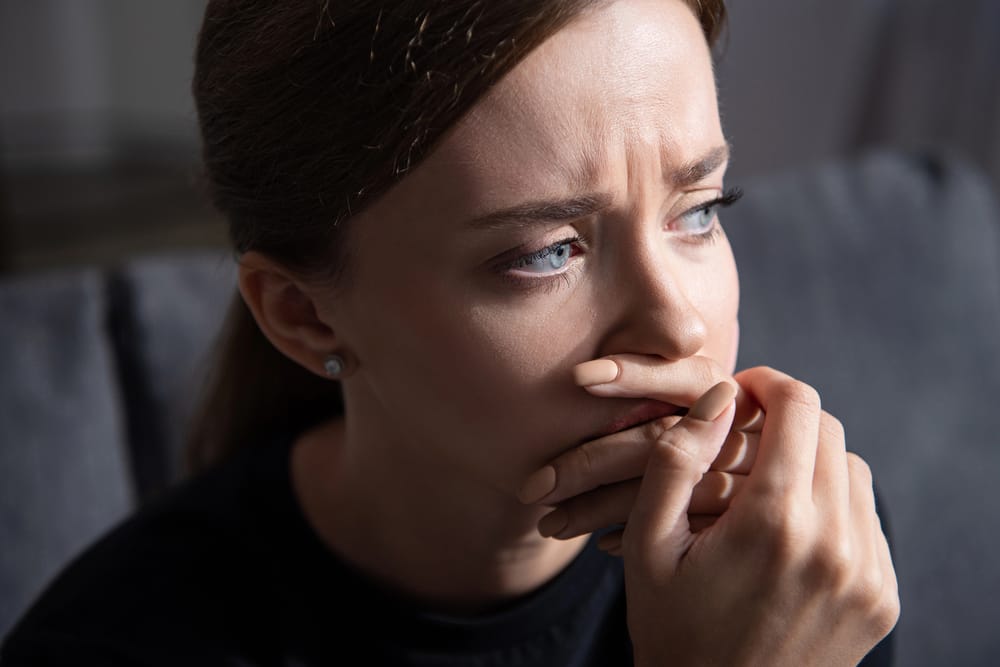
The words hung in the air between me and my doctor: "You have breast cancer."
In that life-altering moment, time both stopped and accelerated. My world, once filled with kids’ activities, work deadlines and weekend plans, instantly transformed into something unrecognizable. For weeks after that, I'd catch myself in ordinary moments—preparing dinner for my family or helping my son with his homework then the reality would crash over me again, stealing my breath.
Perhaps you've felt this too. That surreal disconnect between the life you knew yesterday and the uncertain path stretching before you today.
The nights were the hardest. Lying awake at 2 AM, I'd feel the weight of every "what if" thought running through my head:
What if the cancer is more aggressive than they thought?
What if I can't be there when my son graduates?
What if my husband sees me differently now?
What if I never feel whole again?
What if the side effects from treatment become debilitating to me?
These thoughts weren't just passing worries—they were deep, visceral fears that seemed to take up physical space in my body. My shoulders tightened. My jaw clenched. My breathing shortened until each "what if" felt like another brick on my chest.
And if you're like me—someone who has always found strength in faith, who prides herself on caring for others, who shows up dependably in her community—these fears can feel especially disorienting. How do we reconcile the woman of faith we've always been with this new landscape of uncertainty?
What I discovered through my journey is this: Uncertainty is real, but it doesn't have to become your home address. The path forward isn't about eliminating fear—it's about learning to walk alongside it but not letting it take the lead.
Understanding Our Fear Response: More Than Just Worry
That constant hum of anxiety isn't a character flaw or a lack of faith. It's your body doing exactly what it was designed to do: protect you.
When faced with a cancer diagnosis, our brain's threat detection system—primarily the amygdala—goes into overdrive. It's constantly scanning for danger, which is why you might find yourself:
- Getting startled more easily at unexpected noises
- Feeling suddenly tearful during ordinary conversations
- Obsessively researching symptoms or treatments late into the night
- Mentally rehearsing worst-case scenarios
- Struggling to concentrate on books or conversations that once held your attention
This heightened state of alertness is exhausting, but it's also a normal response to an abnormal situation. Your body is trying to keep you safe in the only way it knows how.
The problem isn't the fear itself—it's when fear becomes our primary lens for viewing the future.
From Fearful Questions to Faithful Presence
In those early weeks after diagnosis, I found myself caught in an exhausting pendulum swing between desperate control and complete hopelessness. I'd meticulously research treatment options one moment, then collapse in tears the next, convinced nothing would make a difference.
The turning point came when during a group coaching call when the coach asked - "What if you approached this moment with curiosity instead of fear?"
Something shifted. What if, indeed?
That evening, I opened my journal and wrote: "Lord, I don't know what tomorrow holds, but I know with absolute certainty who holds tomorrow. And who holds me."
Don’t get me wrong, my fears didn’t magically disappear overnight. But it was the beginning of a different relationship with them—one where fear could exist without consuming me.
The Practice of Present Faith
Fear projects us into an imagined future. Faith anchors us in the present reality of God's presence.
Here's what this looked like in practical terms:
1. Sacred Grounding Practice
When anxiety spirals began (often at night or before appointments), I developed this ritual:
- Breathe deeply - Inhale for 4 counts, hold for 2, exhale for 6
- Name what's real - 5 things I can see, 4 I can touch, 3 I can hear, 2 I can smell, 1 I can taste
- Speak truth - "This moment is all that's required of me right now."
- Rest in prayer - "Lord, I know that you are here with me. I am not facing this alone."
This simple practice pulled me from the imagined threats of tomorrow back into the tangible safety of now.
2. Reframing "What Ifs" with Truth
Our minds naturally gravitate toward threat. We must intentionally redirect them toward truth.
When the "what ifs" arose, I began to counter them with "what is true":
When Fear Says
Truth Responds
"What if the cancer spreads?"
"What if my kids grow up without me?"
"What if I never feel normal again?"
"What if my faith isn't strong enough?"
"Right now, I'm following my treatment plan faithfully."
"Today, I am present, loving them intentionally."
"In this moment, I can honor my body's journey."
"Even when I cannot hold on to God, He is holding onto me."
This wasn't about toxic positivity or denying legitimate concerns. It was about placing those concerns within the wider context of God's presence and provision.
3. The Sacred Circle of Control
During a particularly difficult week of treatment, I came across a simple drawing of two concentric circles.
The inner circle contains everything you can control and influence: your response, your self-care, your prayers, your medical decisions. The outer circle holds everything beyond your control. Our job isn't to manage both circles—it's to faithfully tend to the inner one and surrender the outer one to God.
I began making this concrete by creating two daily lists:
Within My Circle:
- Taking my medications
- Drinking enough water
- Speaking kindly to myself
- Reaching out for support
- Praying honestly
In God's Circle:
- Scan results
- Treatment side effects
- Others' reactions
- Timeline of recovery
- Ultimate outcomes
This visual reminded me of what writer and cancer survivor Kate Bowler beautifully expressed: "The opposite of fear isn't bravery. It's surrender."
4. Contained Worry, Unlimited Faith
Rather than letting anxiety infiltrate every moment, I designated specific "worry windows"—15 minutes each day to journal my fears completely and honestly. When the timer sounded, I would close my journal and visualize placing those concerns into God's hands.
Was this difficult at first? Absolutely. But like any discipline, it became more natural with practice. I found freedom in knowing I wasn't ignoring my fears—I was simply giving them appropriate boundaries.
The Community That Carries Us
One of the most painful ironies of serious illness is that it strikes just when we need connection most, yet often leaves us feeling isolated by the very uniqueness of our experience.
No one can walk your exact path. But you were never meant to walk it alone.
Early in my journey, I made a vulnerable decision. Instead of protecting others from the reality of my struggle, I opened my heart to let trusted people in. Not everyone, but those who could hold space for both my fear and my faith without trying to fix either.
This "Faith Squad" became essential to my healing:
- My Truth-Teller: The friend who would gently redirect me when fear distorted my thinking
- My Prayer Partner: Someone who would intercede when I couldn't find the words
- My Joy-Bringer: In my case, my husband, who knew when I needed distraction, laughter, and ordinary conversation
I learned to be specific about my needs: "I don't need solutions right now—just your presence." Or "Could you pray specifically about my chemo treatment on Friday?" Or sometimes simply, "I need to cry without anyone trying to cheer me up."
This vulnerability wasn't weakness—it was wisdom. Even Jesus, in His hour of deepest distress, asked Peter, James and John to stay close.
Finding Purpose in the Wilderness
About six months into treatment, something unexpected began to emerge from my struggle—a sense of calling.
It started small. A newly diagnosed woman from my support group would reach out for support. During our exchange, I realized that my raw experiences—even the messy, unresolved parts—could become a lighted candle for someone just beginning the journey.
This wasn't about having all the answers. It was about offering the comfort I had received, as Scripture reminds us: "God comforts us in all our troubles so that we can comfort others" (2 Corinthians 1:4).
Finding purpose didn't happen overnight. It emerged gradually as I began to ask different questions:
- "How might God use this experience to deepen my compassion?"
- "What insights am I gaining that I wouldn't have learned any other way?"
- "How can my story create space for someone else to feel less alone?"
- "How can I use this experience to serve others for His honor and glory?"
This shift from "cancer did not happen TO me" to "this happened FOR me" didn't erase my fears. But it did give them a different context—one where even the darkest moments might eventually serve a redemptive purpose.
Daily Rhythms That Anchor the Soul
Big revelations sustain us for moments. Daily practices sustain us for the journey.
Through experimentation, I developed simple rhythms that helped me live from a place of faith rather than fear:
Morning Ritual: Receiving the Day
- One verse from the Bible app on my phone that I reflect on to begin my day
- One prayer of surrender or just sitting in silence
- Three deep breaths
- Gentle movement (even if just stretching in bed)
Daytime Pauses: Recalibrating to Truth
- Set phone alarms at three points during the day
- At each alarm: stop, breathe, and whisper, "Even here, God is present"
- Touch a physical reminder (I have a Miraculous Medal pendant, a cross, and a charm with HOPE written on it that I touch often)
Evening Release: Closing the Day
- Record three moments of grace and gratitude (no matter how small)
- Release tomorrow's concerns in prayer or sit in silence
- Engage in a small pleasure (a fragrant cup of tea, a favorite show, reading a good book)
- Speak peace over my sleep: "I will lie down and sleep in peace, for you alone, O Lord, make me dwell in safety" (Psalm 4:8)
These practices weren't complicated or time-consuming. But they created consistent touchpoints with truth throughout my day, like trail markers on a difficult path.
Protecting Your Peace: Boundaries That Honor Your Journey
In our hyperconnected world, information is constant but wisdom is rare. I quickly learned that not all inputs deserved equal access to my heart and mind during this vulnerable season.
I created intentional boundaries around:
Medical Information:
- Stayed off Google as much as possible and consumed medical information from reliable sources like the American Cancer Society, National Cancer Institute, Breast Cancer Research Foundation, Susan G Komen, National Breast Cancer, WebMD, Mayo Clinic, etc.
- Designated specific times for research instead of constant searching
- Requested that my doctor give me information in my preferred format (for me, straightforward and detailed with some hope and success stories always included)
Social Engagement:
- Crafted a simple response for unwanted advice: "Thank you for caring about me. Right now, I'm following my doctor's plan."
- Gave myself permission to leave difficult conversations: "I need to step away from this discussion for my wellbeing."
- Created a signal with close family for when I needed to exit social situations
Digital Consumption:
- Restricted social media consumption during treatment and only use it to go to Breast Cancer support groups that I'm a part of
- Unsubscribed from email newsletters that triggered anxiety
- Created a "peace playlist" of music that settled rather than stirred my spiritListened to empowering and hopeful podcasts like Christy Wright's Get Your Hopes Up.
These boundaries weren't about avoidance—they were about stewardship. In a season where my emotional and physical resources were limited, I needed to be intentional about where they went.
A New Relationship with Uncertainty
Today, almost two and a half years past my diagnosis, I still experience moments of fear. Certain anniversaries, unexplained symptoms, or friends receiving difficult news can all trigger the familiar "what ifs."
But something fundamental has changed in my relationship with uncertainty.
I've discovered that peace isn't the absence of unknown factors—it's the presence of a known God in the midst of them.
The future remains unwritten. There are still outcomes I cannot control and questions I cannot answer. But I no longer feel compelled to eliminate all uncertainty in order to experience peace.
Instead, I've learned to ask:
- "What is mine to carry today?"
- "Where is God's faithfulness visible right now?"
- "How can I be fully present in this moment?"
Your Journey Forward
Dear sister, I don't know exactly where you are in your breast cancer journey. Perhaps you're newly diagnosed, still reeling from the initial shock. Maybe you're in the thick of treatment, taking one exhausted step after another. Or perhaps you're on the other side, navigating the complex emotions of survivorship.
Wherever you are, please hear this truth: The "what ifs" may always whisper, but they don't get the final word on your story.
Your fear is understandable. Your questions are valid. Your struggle is seen.
And in the midst of it all, something beautiful and resilient is taking shape within you—a deeper capacity for authentic faith, for genuine connection, for meaningful purpose.
This journey was not in your plans. But you are not walking it without purpose, without support, or without hope.
Fear may rise in waves, but faith is your anchor.
And the same is true for you, my friend.
“The art of living well is not in eliminating uncertainty, but in learning to thrive in its presence. Cancer taught me that while I cannot control tomorrow's outcomes, I can choose how fully I live today.” - Kate Bowler
Let today be the beginning of a new chapter—one where you live fully in the now, trust God with what comes next, and believe in a future that holds purpose, beauty, and peace beyond what your fears can imagine.
You are not defined by your diagnosis.
You are not diminished by your fear.
You are not alone on this path.
You are a warrior.
A woman of profound worth.
A beloved daughter of the Most High God.
Live your best, most authentic, faith-filled pink life, my friend—one precious day at a time. 💖
P.S. If the weight of uncertainty feels too heavy to carry right now, I've created something just for you. Download my free resource, Empowered Journey: A 5-Step Holistic Guide for Women Navigating Breast Cancer. This guide walks you through strengthening your heart, body, mind, soul, and relationships during this challenging season. Remember, sweet sister, your journey extends beyond medical treatments—it encompasses every aspect of who you are. Your wholeness matters profoundly. Let this guide support you in finding peace amid uncertainty, making decisions aligned with your values, and transforming your cancer experience from one of fearful waiting to purposeful living. The path ahead may not be one you would have chosen, but with intentional care for every dimension of your being, you can walk it with dignity, faith, and even moments of unexpected grace. You are never alone in this journey.
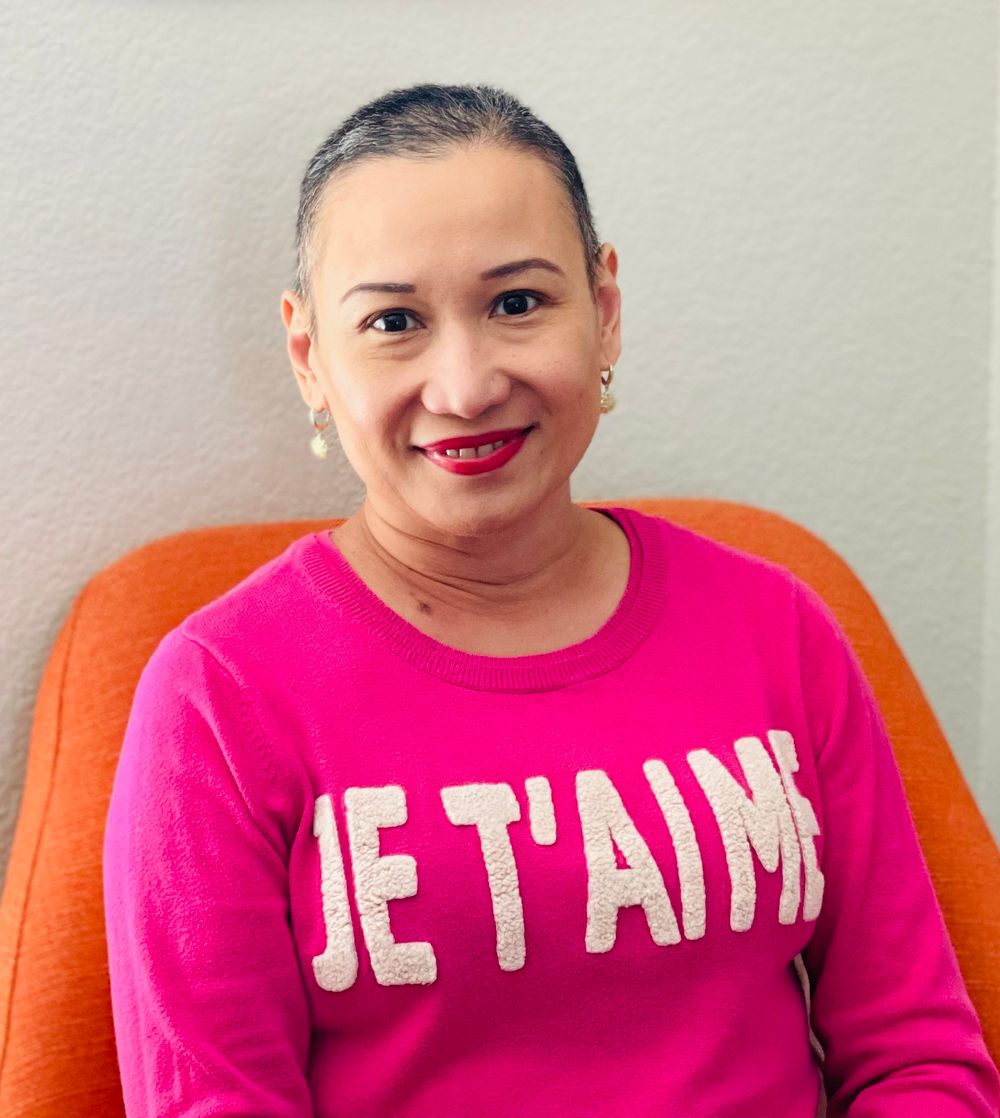
Hey I'm Michelle
Your Pink Sister and Tough-Love Cheerleader
You don’t have to lose yourself to breast cancer. 💗
Certified faith-based life + health coach.
Breast cancer survivor.
Wife. Mom. Warrior in heels.
Let’s get one thing straight:
You don’t have to lose yourself to breast cancer.
Not your faith.
Not your fire.
Not your future.
If you’re overwhelmed, exhausted, and wondering how you’re supposed to hold it all together while your life feels like it’s falling apart, you’re not alone.
I’ve been where you are: scans, side effects, sleepless nights, and the silent question: "God, am I going to be okay?"
And here’s what I know for sure:
You can still heal—physically, emotionally, and spiritually.
You can still feel strong, beautiful, and anchored in peace.
You can thrive in the middle of the fight.
Inside every blog post here, you’ll find faith-filled truth, real tools, and zero fluff.
We’ll quiet the fear, strengthen your body, process the hard emotions, lean hard into God’s promises.
And walk this road together.
Because you’re not broken.
You’re becoming.
💖 Live your most faith-fueled, pink-powered life... one healing step at a time.
PAGES
SOCIAL
