The Prayer I Didn't Want to Pray: Surrendering Control During Cancer
Tuesday, November 25, 2025
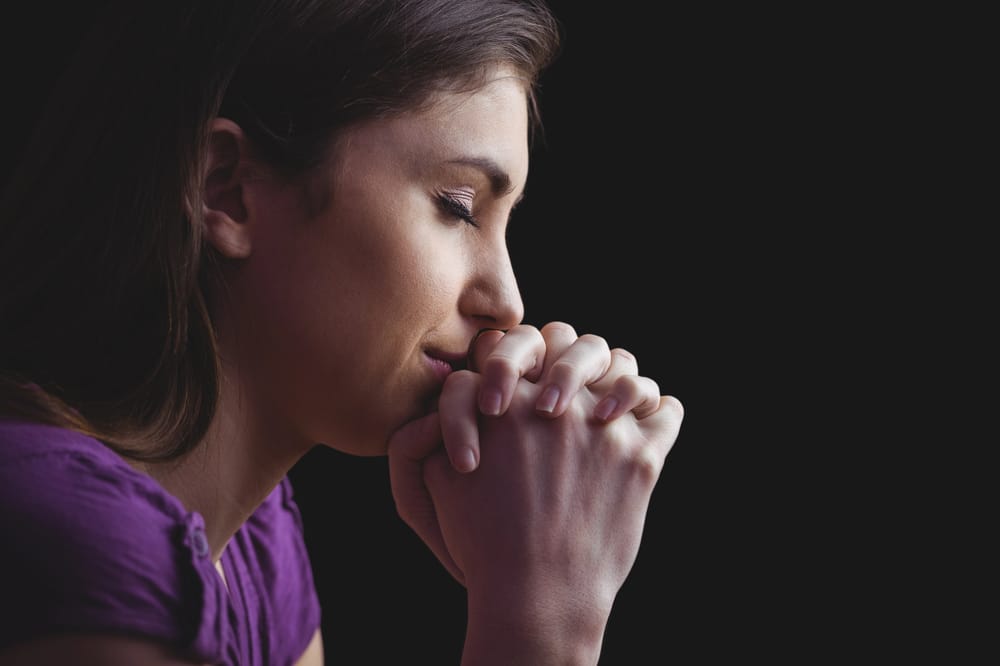
I was lying in bed at 2 AM, staring at the ceiling for the third night in a row, when I realized that my prayers had become a form of desperate bargaining.
For months after my breast cancer diagnosis, I had been praying with the same intensity. "Please Lord, have mercy on me and heal me," I would whisper, sometimes dozens of times a day, as if the repetition itself could guarantee the outcome I desperately wanted.
But as I lay there, exhausted from worry and worn down by the weight of trying to orchestrate my own miracle, I remembered something that would change everything: the lesson my husband and I had learned years earlier when we were praying for a child.
If you're lying awake at night trying to pray your way to a guaranteed outcome, wrestling with God about your cancer diagnosis while fighting to maintain control over everything else in your life, this is for you, sweet sister. Sometimes the prayer we don't want to pray is exactly the prayer that sets us free.
When Prayer Becomes Bargaining
Surrendering control during cancer felt impossible for someone like me. I was the organized mom who never missed a school event, the fearless leader who managed family and career with precision, the woman who had successfully taken control of her health and reversed Type 2 diabetes through discipline and determination.
If I could control my blood sugar, manage a team, and keep three teenage boys on track, surely I could pray my way to healing, right?
My prayers during cancer diagnosis became an extension of my need to control outcomes:
- "Please heal me completely"
- "Let the treatment work perfectly"
- "Make the cancer disappear"
- "Give me the faith of the bleeding woman who touched your cloak"
Growing up in a deeply Catholic family, I watched my mother suffer through stage 4 colon cancer. Even during her darkest and most painful moments, she held onto God and trusted His plan. She never once questioned God. She stood steadfast in her faith. I wanted that same unwavering belief, but I was trying to manufacture it through the force of my prayers.
The Moment Everything Changed
Prayer and faith during cancer treatment shifted for me when St. John Paul II's relic came to Austin at the beginning of my chemotherapy. Standing there, I was reminded of something profound: years earlier, when my husband and I were struggling with infertility, we prayed fervently for a baby, month after month. It wasn't until we decided to let go, trust God, and ask for then Pope John Paul II's intercession—when we released our death grip on our desired outcome—that we finally conceived our first child.
The connection hit me like lightning! I was doing the same thing with cancer that I'd done with infertility—trying to control God instead of trusting Him.
That night, the prayer that emerged wasn't the one I wanted to pray. It felt almost like giving up, like admitting defeat. But as the words formed in my mind, I felt something I hadn't experienced in months: peace.
"Thy will be done."
Three simple words that felt both terrifying and liberating.
The Internal Battle of Letting Go
Letting go during cancer treatment conflicted with everything I'd learned about being strong. Wasn't I supposed to fight? My eldest son had broken down crying one day, admitting that his deepest fear was that I'd be gone. I told him, "I will do everything in my power to fight, but we also need to trust God and His divine plan."
But privately, I was struggling with my own trust.
The brutal questions that kept me awake:
- If I stop asking for healing, does that mean I've given up?
- Will God think I don't want to live?
- How can I surrender when my family needs me to fight?
- What if letting go means accepting the worst outcome?
The scripture that anchored me: "Trust in the Lord with all your heart and lean not on your own understanding" (Proverbs 3:5). This verse became my lifeline when my need to understand and control everything threatened to drown me.
What Surrender Actually Looked Like
Cancer surrender and faith didn't mean passive resignation. It meant active trust. There's a profound difference between giving up and giving over.
Giving up says, "I can't do this anymore. I quit. There's no hope." Giving over says, "I can't do this alone. God, I trust You. Lead me."
Giving up is passive resignation: lying down in defeat, letting circumstances crush your spirit, and abandoning all effort. Giving over is active trust: choosing daily to place your burdens in God's capable hands while still showing up, still fighting, still believing.
My prayers began to change:
- Instead of "Please heal me" → "Show me what You want from me during this season"
- Instead of demanding specific outcomes → "Help me trust Your plan even when I can't see it"
- Instead of trying to control the future → "Give me peace for today"
This shift affected more than just my prayer life. As someone who had successfully managed diabetes through control and discipline, getting cancer despite "doing everything right" was a harsh reminder that we can do all the right things, but God's plan will always prevail. I didn't get cancer because I deserved it, but perhaps because He wanted to bring me closer to my own calling and purpose.
Practically, surrender meant:
- Letting go of being physically present for every family event when my immune system was compromised
- Releasing the need to be everyone's rock and allowing others to support me
- Accepting medical accommodations instead of trying to power through
- Learning to delegate more at work and trusting my team to execute our strategies
The Peace That Surprised Me
When I finally released my white-knuckled grip on controlling my cancer outcome, something extraordinary happened. Trusting God during cancer treatment brought an unshakeable peace that anxiety couldn't touch.
What surrender gave me:
- Sleep returned to replace the 2 AM worry sessions
- Presence with my family instead of constant mental planning for worst-case scenarios
- Joy in small moments instead of waiting for the "all clear" to be happy
- Purpose in helping others instead of being consumed with my own outcome
The ripple effect was beautiful. My boys watched me model what it looks like to trust God with outcomes beyond our control. My husband saw me learn to receive support instead of always being the giver. My team discovered their own capabilities when I trusted them with greater responsibility.
5 Practical Ways to Practice Surrender During Cancer
Learning to surrender control during cancer isn't a one-time decision. It's a daily practice. Here are specific strategies that helped me move from desperate bargaining to peaceful trust:
1. Start With Small Daily Surrenders
The reality: You don't have to surrender everything at once. Begin with what feels manageable.
What this looks like:
- Surrender your need to control traffic when driving to appointments
- Release expectations about how you'll feel each morning
- Let go of perfect meal planning and accept help with groceries
- Trust your team to handle work decisions without your constant input
Daily practice: Each morning, identify one small thing you'll surrender control of that day.
2. Rewrite Your Prayer Language
The reality: The words we use shape our hearts and minds.
Instead of demanding prayers:
- "Please heal me" → "Show me how to trust You through this"
- "Make this go away" → "Help me find purpose in this season"
- "Give me the outcome I want" → "Give me peace and understanding with whatever comes"
- "Fix this situation" → "Use this situation to draw me closer to You"
Practice: Write down your most frequent prayer requests, then rewrite them as surrender prayers.
3. Create "Trust Anchors" Throughout Your Day
The reality: Surrender needs to be reinforced regularly, not just during crisis moments.
Practical anchors:
- Set phone reminders with Proverbs 3:5: "Trust in the Lord with all your heart"
- Use transition moments (entering the hospital, starting treatment) as surrender cues
- Practice the breath prayer: "Into Your hands" (inhale), "I surrender this" (exhale)
- Keep a surrender journal where you write down what you're releasing to God each day
4. Practice the "What If" Release Exercise
The reality: Fear often disguises itself as planning, keeping us trapped in cycles of worry.
The exercise:
- Write down your biggest "what if" fears about cancer
- For each fear, write: "If this happens, I trust that God will provide what I need"
- End with: "I release this outcome to You and choose peace for today"
- Repeat whenever the fear resurfaces
Personal example: "What if the treatment doesn't work?" became "If the treatment doesn't work, I trust that God will give me and my family strength for whatever comes next."
5. Delegate as Spiritual Practice
The reality: Learning to trust others with responsibilities is training for trusting God with outcomes.
How I practiced this:
- Asked family members to handle tasks I normally controlled
- Accepted help with meals, cleaning, and logistics without micromanaging
- Let my husband make medical appointment decisions when I was too exhausted
- Delegated work projects and truly let my team own the results
The connection: If I could trust my team to execute our strategy, I could trust God to execute His plan for my life.
For the Woman Still Bargaining with God
Sweet sister, if you're exhausted from trying to pray your way to guaranteed outcomes, if you're worn out from bargaining with God or searching for the "right words" that will finally unlock His favor, I need you to hear this: God knows exactly what's in your heart even before you utter the words. He sees the fears you can't articulate, the hopes you're afraid to speak aloud, and the questions you whisper only in the darkest hours.
Surrender is the hardest prayer I've ever had to utter. It required me to release my white-knuckled grip on control and admit that I couldn't orchestrate my own healing, protect my own future, or guarantee the outcomes I desperately wanted. It meant opening my clenched fists and letting go of the illusion that if I just tried hard enough, prayed perfectly enough, or believed strongly enough, I could force the ending I desired.
But here's what I discovered in my season of surrender: surrendering to Him isn't a sign of weakness. It's a sign of courageous faith. It takes more strength to let go than to hold on. It takes more bravery to trust God with uncertain outcomes than to demand guaranteed results. It takes more faith to say "Your will be done" than to insist "My will be done."
Surrender isn't giving up on God. It's falling deeper into His arms.
It's not abandoning hope. It's redirecting that hope from outcomes you can't control to the character of a God who never changes.
It's not passive resignation. It's active trust in the One who sees what you cannot see and knows what you do not know.
Surrender is the greatest form of love because it says: "God, I love You more than I love my own plans. I trust You more than I trust my own understanding. I believe Your goodness even when I can't see Your hand. I will worship You in the waiting, praise You in the uncertainty, and rest in Your presence even when I don't have all the answers."
This kind of surrender doesn't come naturally. It's a daily, sometimes moment-by-moment choice to release control and embrace trust. Some days, you'll have to surrender the same fear multiple times before bedtime. Some days, you'll have to pry your own fingers off the steering wheel of your life and place them, trembling, into God's hands. And that's okay. Surrender is a practice, not a one-time event.
So if you're tired of performing for God, exhausted from trying to earn healing through perfect faith, or worn out from attempting to manipulate outcomes through flawless prayers: STOP. JUST STOP. Come as you are: messy, scared, uncertain, imperfect. God isn't waiting for you to get it right. He's waiting for you to come home to His heart, where your surrender meets His sufficiency, and your weakness becomes the canvas for His strength.
The Prayer That Changes Everything
For those still struggling with control: You don't have to believe perfectly to start surrendering. You don't need to feel peaceful to begin trusting. You can start exactly where you are, with whatever faith you have, and simply say:
"Thy will be done. Help me trust You with what I can't control. Show me what You want from me in this season. Give me peace for today."
For those who don't pray: The principle remains the same. Sometimes the most powerful thing we can do is let go of outcomes beyond our control. Whether you call it surrender, acceptance, or release, the result is the same: profound peace in the midst of life's storms.
The Woman I Became Through Surrender
Today, as I help other women navigate their own cancer journeys, I share the hardest-won lesson of my life: sometimes the most powerful prayer isn't asking for what we want, but surrendering to what wants to emerge through us.
Surrendering control during cancer taught me that:
- True strength comes from dependence on God, not self-reliance
- Peace is possible even without guarantees
- Trust is a choice we make daily, not a feeling we wait for
- Our greatest ministry often comes from our deepest struggles
The bleeding woman in the Bible did touch the hem of Jesus' cloak and found her healing. But perhaps the real miracle wasn't in the touching. It was in her willingness to reach beyond herself, to step into faith without guarantees, to surrender her outcome to something greater than her understanding.
That night at 2 AM, lying in my bed wracked with worry, I thought I was giving up. What I was actually doing was finally learning how to let go. And in that letting go, I found not just peace, but purpose—a calling to help other women discover that surrendering control isn't the end of the fight; it's the beginning of a different kind of strength.
"Surrender is not giving up. It's letting go of the need to control what was never ours to control in the first place." — Unknown
Sweet sister, we cannot always change our circumstances, but we can surrender our need to control them. And in that surrender, we find a peace that surpasses understanding.
Surrender isn't weakness. It’s the courage to trust a love bigger than our fear.
Live your best pink life—not because you can control the outcome, but because you can trust the One who holds your story.
P.S. If you're struggling to find peace while fighting cancer and need support for whatever stage of your journey you're in, visit my Resources Hub. Whether you're newly diagnosed and overwhelmed by medical decisions, in active treatment and wrestling with surrender, or working to rebuild your faith after cancer, there are resources designed specifically to help you find strength, clarity, and peace. Sweet sister, you don't have to carry the weight of control alone—sometimes the most faithful thing you can do is learn to let go.
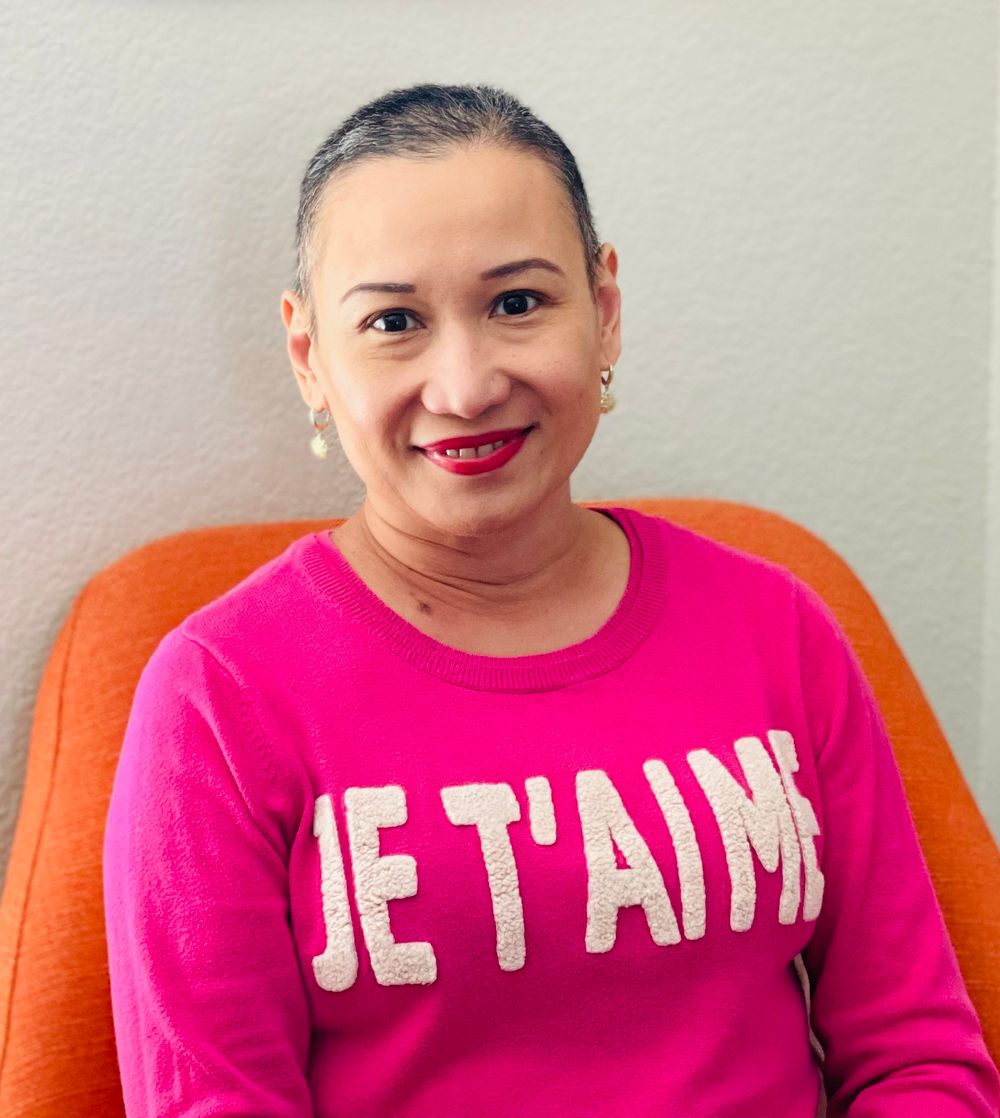
Hey I'm Michelle
Your Pink Sister and Tough-Love Cheerleader
You don’t have to lose yourself to breast cancer. 💗
Certified faith-based life + health coach.
Breast cancer survivor.
Wife. Mom. Warrior in heels.
Let’s get one thing straight:
You don’t have to lose yourself to breast cancer.
Not your faith.
Not your fire.
Not your future.
If you’re overwhelmed, exhausted, and wondering how you’re supposed to hold it all together while your life feels like it’s falling apart, you’re not alone.
I’ve been where you are: scans, side effects, sleepless nights, and the silent question: "God, am I going to be okay?"
And here’s what I know for sure:
You can still heal—physically, emotionally, and spiritually.
You can still feel strong, beautiful, and anchored in peace.
You can thrive in the middle of the fight.
Inside every blog post here, you’ll find faith-filled truth, real tools, and zero fluff.
We’ll quiet the fear, strengthen your body, process the hard emotions, lean hard into God’s promises.
And walk this road together.
Because you’re not broken.
You’re becoming.
💖 Live your most faith-fueled, pink-powered life... one healing step at a time.

PAGES
SOCIAL
